Messe Basel – hub for trade fairs and international events
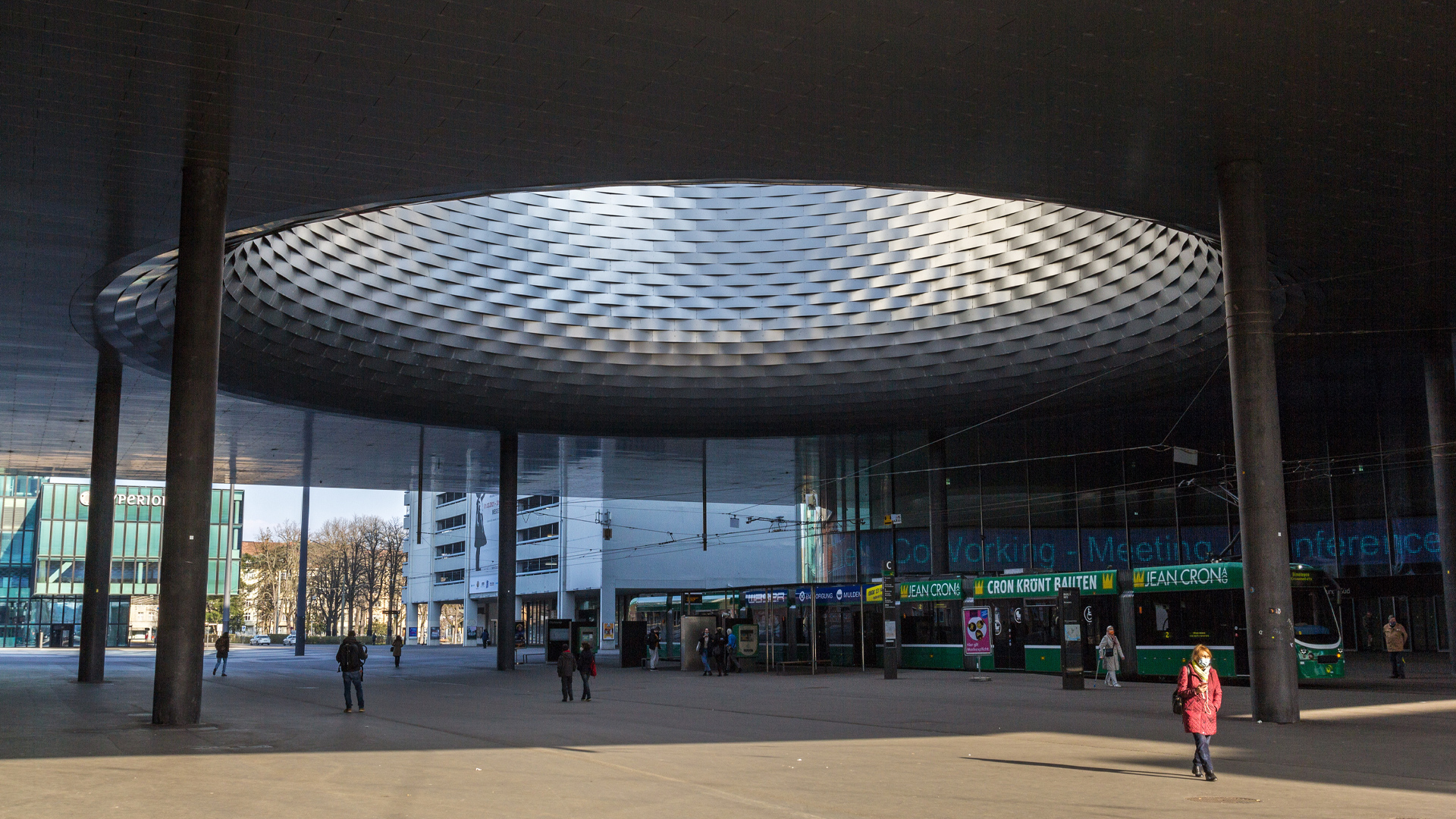
Located between Germany, France and Switzerland, Basel is one of Europe's most important trade fair venues. The city benefits from its location in the border triangle on the Rhine and has been an international hub for trade fairs, congresses and major events in a wide range of industries for decades. This position was established during the 20th century; since then, global formats have shaped its profile and contributed to the economic importance of the location. The exhibition centre has excellent transport links: it is only a few kilometres away from Basel-Mulhouse-Freiburg Airport, which offers direct flights not only to national destinations but also to numerous European destinations. In addition, the region has a dense network of motorways and rail connections. Short distances between the arrival point, the exhibition centre and accommodation are a clear logistical advantage, especially for international exhibitors and visitors.
Which leading trade fairs take place at Basel Exhibition Centre?
- Art Basel – Contemporary art
- BioTechX – Biotechnology, genomics
- Festival of Biologics – Biopharma, antibodies
- Future Labs Live – Laboratory technology, digitalisation
- Swissbau – Construction Industry, Architecture
Historical development and modernisation
Trade fair activities in Basel date back to the first industrial exhibitions of the 19th century, when trade and production became increasingly international. In the 20th century, its function as a trade fair venue was systematically expanded. Stock and performance shows grew into specialised trade formats that soon gained significance beyond national borders. Today, the site is equipped with modern halls, conference rooms and logistics areas that meet the requirements of major international events. Parallel to the structural development, the organisational infrastructure has gained in complexity and professionalism. Technical equipment for stages, media transmissions and digitalisation are now standard. This modernisation enables organisers to implement complex trade fair concepts that go far beyond the mere exhibition of products.
Hall structure and location infrastructure
The exhibition centre consists of a modular hall system with numerous exhibition halls that can be flexibly combined. This modular design allows events of various sizes and content to be held in parallel or one after the other. Characteristic infrastructural features include:
- Spacious, column-free halls with variable floor plans
- Direct connection to the rail and motorway network
- Congress rooms with modern conference technology
- Logistics zones for set-up, dismantling and delivery
Thematic focus and industry profile
The events in Basel cover a wide range of topics. Unlike some centralised trade fair systems, such as those in Germany or France, they are not limited to a single sector. Instead, the portfolio covers a variety of economic fields and interest groups. The main industry focus areas include:
- Pharmaceuticals and life sciences
- Industrial technologies and automation
- Consumer goods and lifestyle
- Medical diagnostics and health
Economic importance for the region
The events make a significant contribution to local and regional economic performance. In addition to direct trade fair activities – stand rentals, exhibitor and visitor registrations – trade fair operations generate demand in the hotel, catering and transport sectors. Numerous service providers from the surrounding area are regularly involved in set-up, technology, catering and event logistics. For companies from Switzerland, but also from neighbouring Germany and France, the trade fair venue offers an economically relevant platform for presenting supra-regional and international business models. Small and medium-sized enterprises in particular use trade fairs to present product innovations or deepen business contacts.
Transport links and international accessibility
The location in the border triangle is a strategic advantage. Basel-Mulhouse-Freiburg Airport is just a few minutes away and is served by numerous international airlines. There are direct connections to many economic centres within Europe. In addition, a well-developed rail network makes it easy to travel to the city even without a flight connection. The proximity to motorways facilitates the transport of heavy exhibits and the arrival of exhibitors with logistics requirements. This is particularly relevant for industrial formats where large machines or complex installations are presented.
Congresses, knowledge transfer and networks
Accompanying congresses, lecture series and specialist programmes are an integral part of the events. These create a content framework that goes beyond mere product presentation. In some cases, intensive discussion forums take place parallel to the exhibitions, in which specialists and executives discuss trends, innovations and strategic issues. In the life sciences and medical technology industries in particular, these knowledge networks are a key gateway to new technologies and partnerships. The exhibition centre thus functions not only as a marketplace, but also as a hub for academic exchange, strategic alliances and international cooperation.
Position in the European trade fair landscape
Compared to large exhibition centres such as Frankfurt, Paris or Milan, the location in Basel plays a unique role. It is not designed as a giant space, but as a functionally integrated venue with an international orientation. Its location in the border triangle in particular makes it a logistical and content-related meeting place for players from different markets. This position has made the location attractive for both globally oriented formats and regional trade events. The combination of international visibility and regional networking makes the exhibition centre a versatile venue in the European context.
Conclusion: functionality meets networking
The exhibition centre in Basel represents a form of trade fair that focuses on functional infrastructure, thematic diversity and international networking. It combines logistical efficiency with thematic depth and uses its geographical location as a bridge between markets. Its strength lies not in its spectacular size, but in its ability to bring together different industries and appeal to both regional and international players. This functional clarity makes the location an integral part of the European trade fair industry and an important meeting place for trade visitors, exhibitors and decision-makers.
Trade fair reporting Germany - Trade fair knowledge, dates & events


