Majority in favour of robots in the workplace – automatica showcases solutions for industry
by A. Bergmeier - 2025-06-04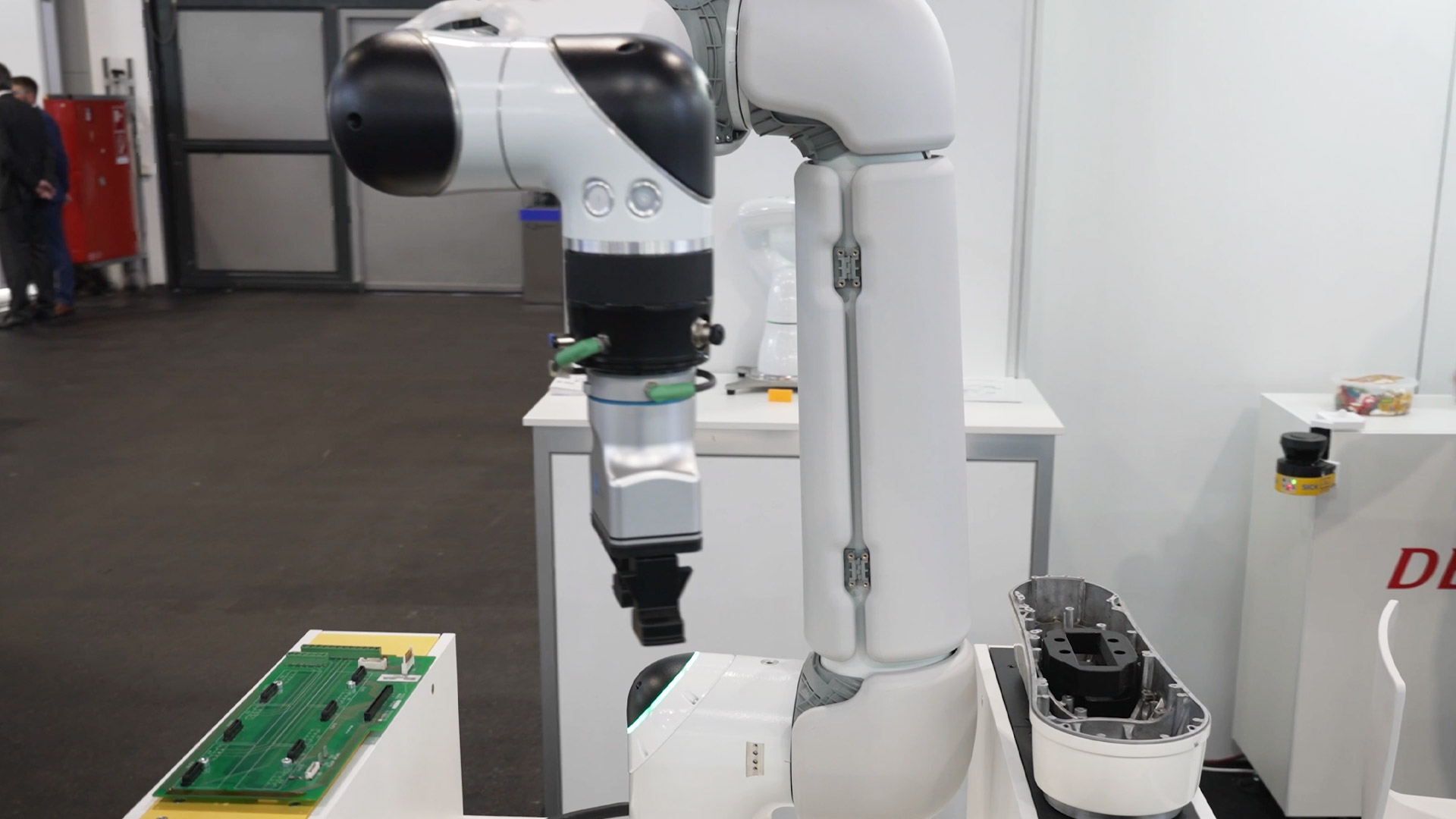
Germans are overwhelmingly positive about the use of robots in the workplace. This is shown by the ‘automatica Trend Index 2025’, which reveals a clear picture of opinion among the workforce. Robots are not primarily perceived as a threat, but as technological support to ensure the competitiveness of industry and overcome structural challenges. This attitude is becoming increasingly important, especially against the backdrop of a shortage of skilled workers. The trade fair automatica 2025 picks up on these developments and presents solutions specifically aimed at industrial users of various sizes. The results of the trend index show that the acceptance of robotics in Germany has grown significantly. Robots are increasingly seen as an integral part of modern working environments and as a tool for securing production sites in the long term. This is also shifting the public debate away from fears of job losses and towards the question of how automation can be used sensibly and responsibly.
Robotics strengthens industry and secures locations
According to the trend index, around three-quarters of German employees expect robots to make an important contribution to securing industrial production in their own country. Approval is particularly high when it comes to taking over tasks that are harmful to health, heavy or monotonous. Many respondents see this as an opportunity to improve working conditions and increase productivity at the same time. However, an international comparison shows that Germany is under pressure. Countries such as China have significantly increased their robot density in recent years and are investing heavily in automation. Germany now ranks only fourth in the global ranking. This development underscores the need for companies and politicians to take action to maintain industrial competitiveness. Robots are not seen as an end in themselves, but as a strategic tool in global competition.
Automation as a response to the shortage of skilled workers
The shortage of skilled workers is one of the biggest challenges facing German industry. Here, too, the majority of employees see robotics as part of the solution. Three out of four respondents expect that the use of robots can help alleviate staff shortages. This is particularly evident in industries with physically demanding jobs or in areas where qualified workers are difficult to find. Robots can take on dangerous or ergonomically problematic tasks, thereby helping to make jobs more attractive in the long term. At the same time, they open up new opportunities for older employees to remain in the workforce for longer. This also brings the issue of age-appropriate work into sharper focus. Automation is not seen as a replacement for human labour, but as a supplement that creates new opportunities.
Humans and machines working together
Another aspect that is evident in the trend index is the desire for a more people-friendly working environment. Robots should not operate in isolation, but in interaction with humans. Collaborative systems that do not require protective fences are therefore gaining in importance. They enable flexible production processes and facilitate the transition to automation, especially for small and medium-sized enterprises. The acceptance of such solutions depends largely on their usability and safety. Intuitive control, simple programming and transparent processes are key prerequisites for employees to perceive robots as a support. This is exactly where automatica comes in, by showcasing practical applications that illustrate the concrete benefits in everyday work.
automatica 2025 as a platform for innovation and exchange
From 24 to 27 June 2025, automatica will bring together around 750 exhibitors from 40 countries at the Munich Trade Fair Centre. The event is considered the world's leading platform for intelligent automation and robotics. The focus is on technologies that facilitate access to robotics and open up new perspectives, especially for small and medium-sized enterprises. A key topic is the user-friendliness of modern systems. Dr Dietmar Ley from the VDMA emphasises that robots should be as intuitive to use as smartphones in the future. This development is considered crucial for breaking down barriers and anchoring automation more broadly in industry. The trade fair not only offers product presentations, but also provides a space for exchange, discussion and orientation.
Social debate and industrial reality
The results of the trend index show that the social debate surrounding robots in the workplace has become more nuanced. While earlier discussions were often dominated by concerns, today a pragmatic view of opportunities and risks prevails. The majority of employees recognise that automation is necessary to maintain industrial value creation in Germany. automatica takes up this stance and combines technological innovation with social responsibility. It sees itself not only as a showcase, but also as a catalyst for industrial change. Robots in the workplace are seen as part of a long-term strategy to harmonise economic power, employment and quality of work.
Trade fair reporting Germany - Trade fair knowledge, dates & events


