Kuka robotics and industrial automation
Kuka is one of the key companies in the field of automation technology and industrial robotics. The company develops solutions that enable production processes to be automated, accelerated and standardized. At the core are robots, manufacturing systems and digital control technologies, primarily used in industrial series production. The focus is not only on increasing efficiency, but also on ensuring process reliability and consistent quality. Automation is increasingly seen as a fundamental requirement for managing complex production demands in an economically viable way.
Origins in the 19th century as a foundation for technological transformation
The company’s roots date back to 1898, when it was founded in Augsburg. Initially, the focus was on traditional industrial products and mechanical engineering. Over the decades, the company evolved and adapted to the requirements of different industries. A decisive transformation took place in the 20th century, when the focus shifted toward automation and manufacturing technology. This change was closely linked to the growing need for industrial efficiency.

From mechanical engineering to industrial robotics
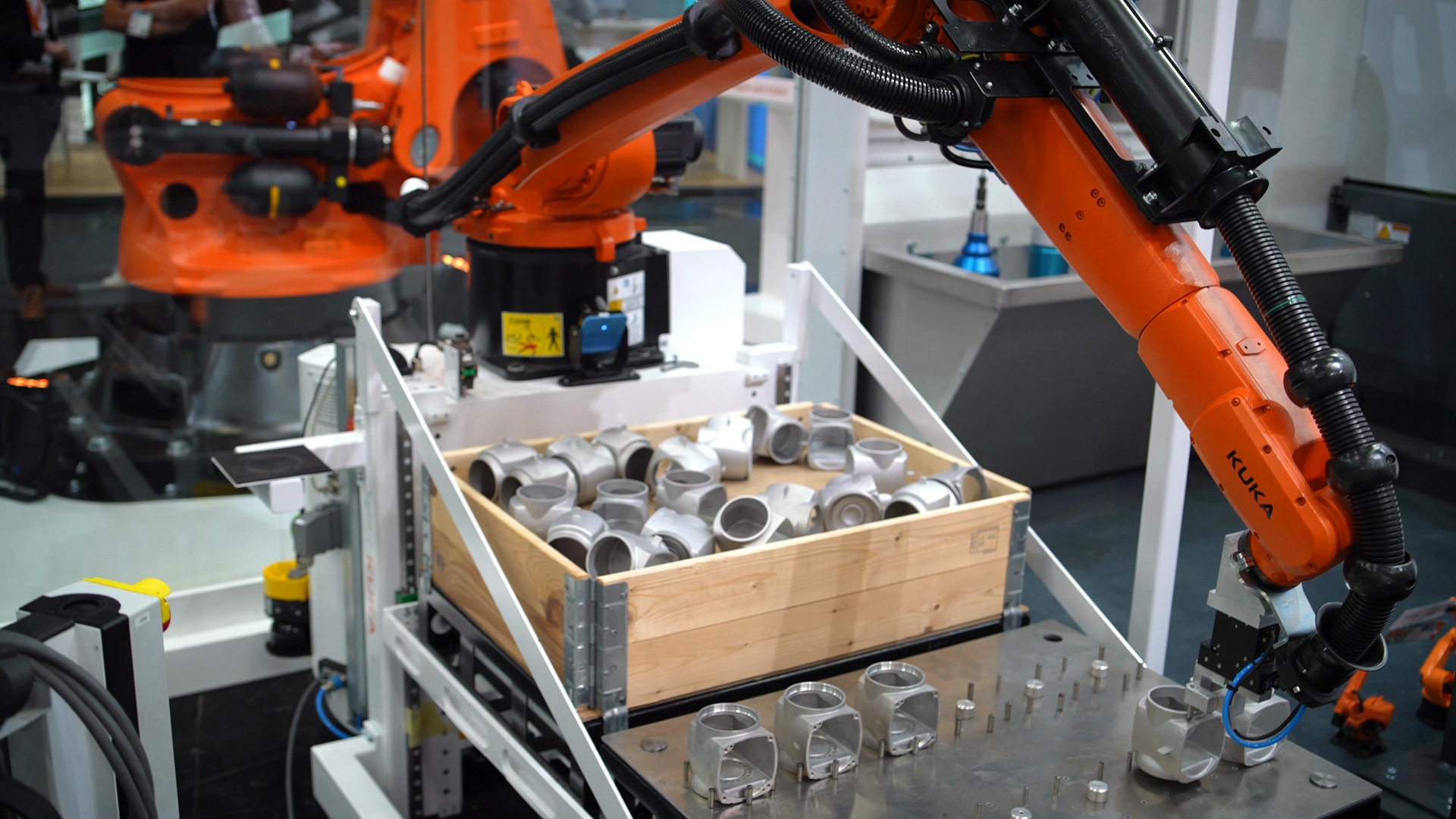
With increasing industrialization and rising demands for precision, automation became a central topic. In this context, Kuka developed robotic systems capable of performing repetitive tasks with high accuracy and reliability. A major milestone was the introduction of programmable industrial robots. For the first time, production processes could be adapted flexibly while maintaining high output volumes in an efficient manner.
Articles on Kuka at Messe.TV
Kuka mxAutomation, AMR, and 24/7 manufacturing EMO 2025
At EMO 2025 in Hanover, Kuka will demonstrate how industrial production can be operated around the clock with intelligent robotics solutions. The trad... Kuka mxAutomation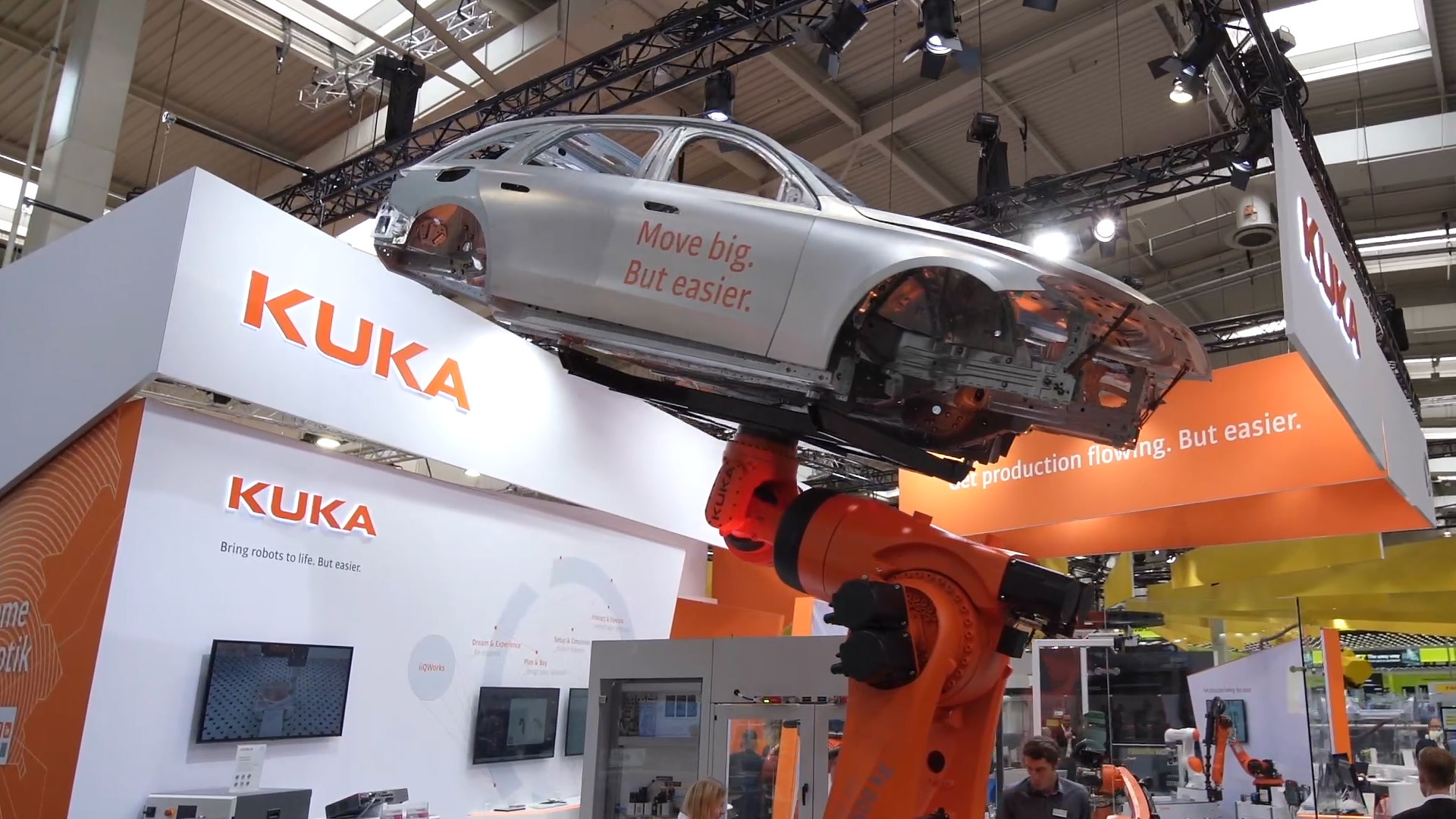
KUKA: Mobile robotics for flexible automation - Messe.TV
KUKA, known for its industrial robots, is increasingly opening up new fields of application and expanding its range in mobile robotics. The automated ... KUKA: Mobile robotics for flexible automation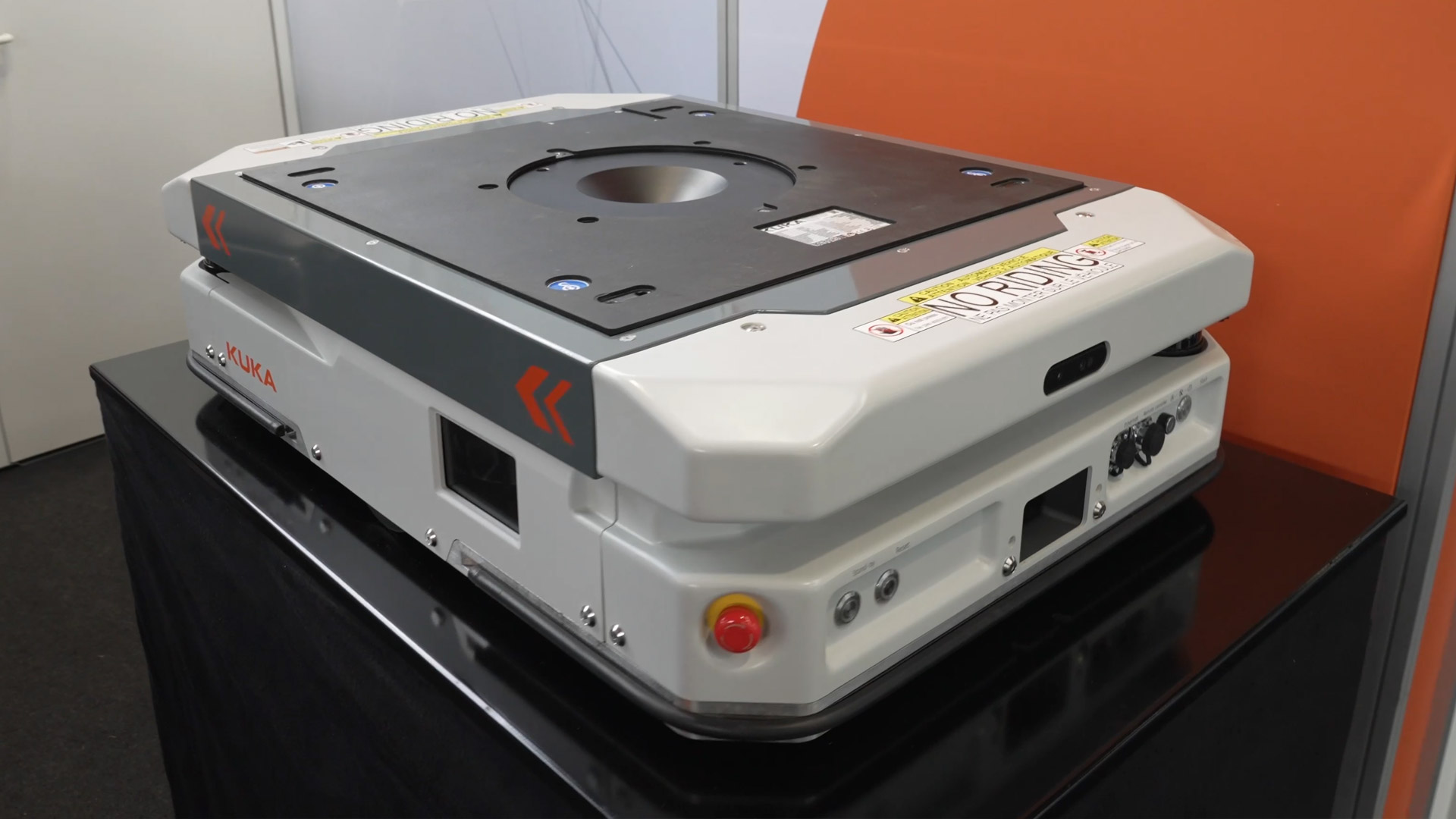
Core application areas across automotive, engineering and logistics
Kuka’s solutions are used in various industries:
- automotive production and supplier industry
- mechanical engineering and metal processing
- logistics and material handling
- electronics manufacturing
- industrial robots for various applications
- automated production lines
- control and software solutions
- systems for human-robot collaboration
Precision, repeatability and integration
A key feature of these systems is their ability to perform tasks with high accuracy and consistent quality. Repeatability is critical in many production processes, especially in high-volume manufacturing. At the same time, integration into existing systems is essential. Solutions must be flexible and capable of interacting with other components. Interfaces and software are becoming increasingly important in this context.
Specialization in automation and robotics
Kuka has established itself as a provider of industrial automation. Its strength lies in the combination of robotics, system integration and digital control. The company represents an approach in which production is understood as an automated process—controlled by technology, optimized through data and designed for efficiency. At the same time, the importance of human-robot collaboration and digitally connected production environments continues to grow, shaping future developments.
Trade fair reporting Germany - Trade fair knowledge, dates & events


