Tiny house or houseboat? Living concepts in comparison
by A. Bergmeier - 2026-03-02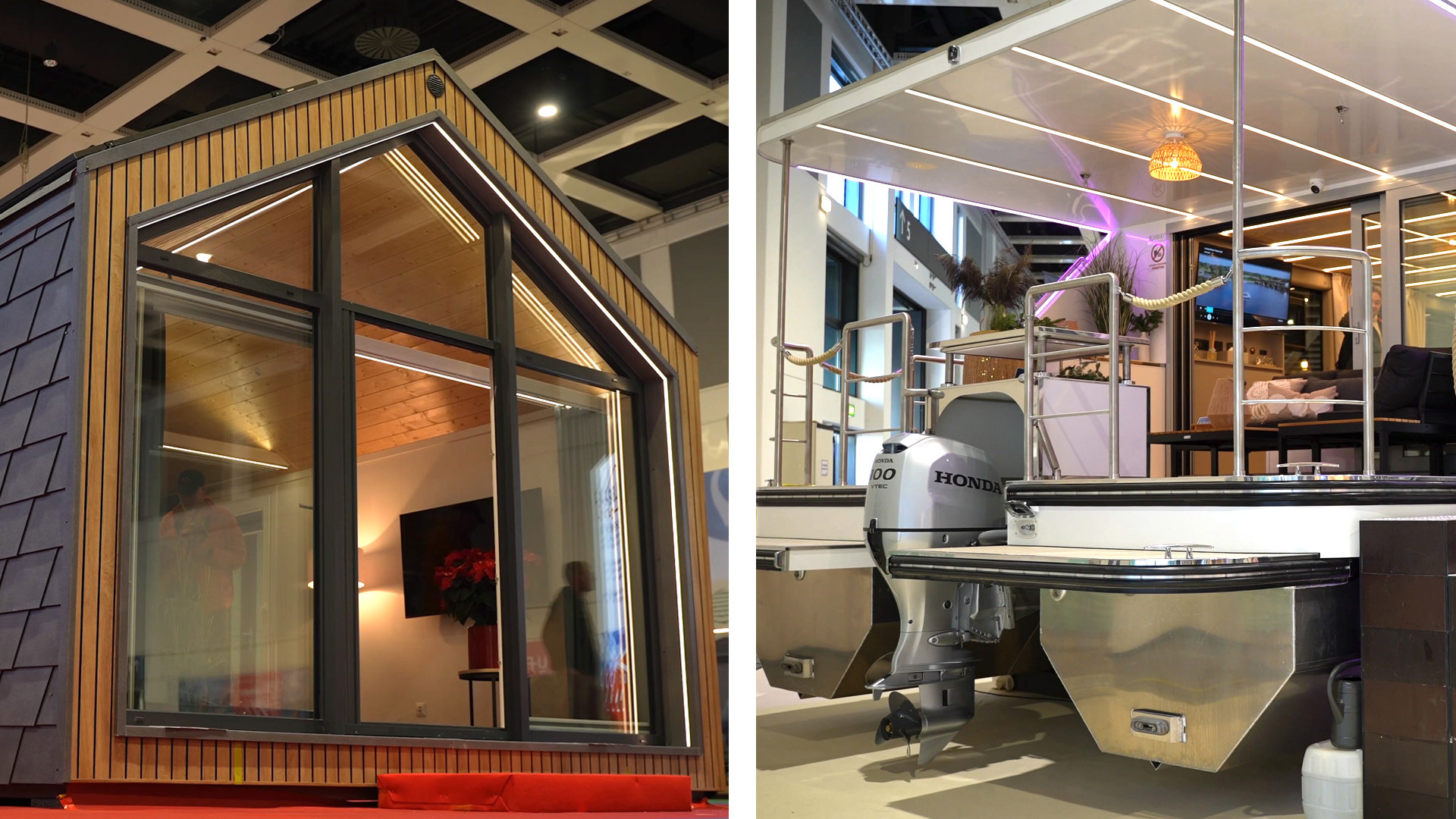
There are many reasons for wanting to downsize your living space. Rising property prices, a changed attitude towards ownership and the desire for greater flexibility are leading to alternative forms of living becoming increasingly popular. Two concepts are particularly popular: the tiny house on land and the houseboat on the water. Both promise a life with less space, but not necessarily with less quality. The comparison shows where the differences lie – technically, legally and in everyday life.
Space efficiency and room concepts
Both tiny houses and houseboats work with clear basic principles of space optimisation. Every square metre must fulfil a function, often several at the same time. Foldable furniture, integrated storage solutions and multifunctional elements are standard in both types of housing. Nevertheless, there are clear differences. Tiny houses are usually rectangular in shape and follow classic living logic: living, cooking, sleeping and bathing areas are clearly defined, albeit in a confined space. Houseboats, on the other hand, are more oriented towards maritime structures. Curves, narrower passageways and lower ceiling heights are not uncommon, as hull shape and statics play a greater role.
Space efficiency and room concepts
Both tiny houses and houseboats work with clear basic principles of space optimisation. Every square metre must fulfil a function, often several at the same time. Foldable furniture, integrated storage solutions and multifunctional elements are standard in both types of housing. Nevertheless, there are clear differences. Tiny houses are usually rectangular in shape and follow classic living logic: living, cooking, sleeping and bathing areas are clearly defined, albeit in a confined space. Houseboats, on the other hand, are more oriented towards maritime structures. Curves, narrower passageways and lower ceiling heights are not uncommon, as hull shape and statics play a greater role. Typical features at a glance:
- Tiny houses rely on modular furniture and vertical use of space
- Houseboats often integrate technology and living space more closely
- Storage space is limited in both, but distributed differently
- Window areas are often larger on the water to make use of light and sightlines
Location, mobility and legal framework
A key difference lies in the location. Tiny houses are located on plots of land and are therefore subject to the building regulations of the respective municipality. Questions regarding development plans, development, permits and permanent use are often complex and regulated very differently from region to region. The issue of primary or secondary residence also plays a role. Houseboats are legally classified as either residential properties or watercraft. Depending on their design, they are considered floating real estate or recreational boats. The decisive factors include the propulsion system, registration and mooring. The place of residence is therefore not just the boat itself, but also the harbour or jetty where it is permanently moored. Comparison of legal aspects:
- Tiny houses usually require a building permit
- Houseboats need an approved mooring
- The registration address is not always a given for either concept
- Permanent residence depends on local regulations
Suitability for everyday use and infrastructure
There are further differences in everyday life. Tiny houses are usually connected to the traditional utility network: electricity, water, sewage and internet work just like in conventional housing. Self-sufficiency is possible, but not a must. Everyday life is therefore very similar to living in a small flat. Houseboats are more technically demanding. Fresh water, sewage, electricity and heating must be organised in a limited space. Many concepts rely on combinations of shore connections and on-board technology. Maintenance and monitoring of the systems are more much a part of everyday life than in a tiny house. Typical challenges in everyday life:
- Limited storage capacity for water and energy
- Regular technical checks for houseboats
- Weather dependency on the water
- Limited accessibility in both types of housing
Cost structure and long-term perspective
The initial costs can be comparable for both types of housing, but vary greatly depending on the fittings, size and construction. A high-quality tiny house can be just as expensive as a modern houseboat with extensive technology. In addition, there are running costs that are often underestimated. Tiny houses usually incur land costs, leasehold or development fees. Houseboats incur mooring fees, insurance and maintenance costs for the hull and technology. In the long term, value retention also plays a role. While tiny houses age structurally like other buildings, houseboats are more dependent on care and use.
Attitude to life and personal priorities
Ultimately, it is less about square metres and more about personal lifestyle. Tiny houses offer stability, proximity to nature and a certain amount of stability in everyday life. Houseboats represent proximity to water, changing perspectives and a different relationship to time and surroundings. Both concepts require a willingness to adapt, conscious consumption and clear priorities. Living in a small space is not a compromise, but a conscious decision. Whether on land or on water, both forms of living show that quality of life does not necessarily increase with living space, but with the fit between space, use and personal needs.
Trade fair reporting Germany - Trade fair knowledge, dates & events


