Michelin: Tires, mobility, and industrial responsibility
For more than a century, Michelin has been one of the key players in the global mobility industry. Headquartered in Clermont-Ferrand, the company has evolved from a specialized tire manufacturer to a diversified provider of mobility solutions. Its focus is on technical reliability, long-term research, and a clear industrial vision that goes far beyond traditional vehicle tires. Today, Michelin supplies a wide range of industries, from personal transportation and commercial vehicles to aviation, agriculture, and industry.
Technological development and industrial role
Michelin was founded in 1889 by brothers Édouard and André Michelin. Early on, the company focused on technical innovations that fundamentally changed the way vehicles were used. The introduction of the removable tire simplified repairs and significantly increased the everyday usability of bicycles and, later, automobiles. The development of the radial tire was another technological milestone that sustainably improved efficiency, mileage, and driving safety and became the industry standard. Over the decades, Michelin has continuously expanded its research and systematically transferred it to new fields of application. Today, tire solutions are developed not only for passenger cars, but also for heavy commercial vehicles, construction machinery, aircraft, and special-purpose vehicles. At the same time, the company is investing in digital systems that make the use of tires measurable and controllable. Sensors, data analysis, and networked platforms are playing an increasingly central role, especially in commercial transport and logistics.
Products, services, and digital systems
Michelin's current portfolio encompasses much more than traditional tire products. In addition to development and production, the company offers complementary services aimed at efficiency, safety, and predictable operation. In the transport and fleet sector in particular, tires are increasingly seen as part of an overall system designed to reduce downtime and conserve resources. Michelin's typical areas of expertise include:
- Tire solutions for passenger cars, commercial vehicles, two-wheelers, aircraft, and special applications
- Digital tire pressure and condition monitoring for fleets
- Software solutions for route and efficiency optimization in freight transport
- Technical services for maintenance, analysis, and service life extension
Articles about Michelin on Messe.TV
Michelin focuses on digital mobility
Anyone who enters a Michelin exhibition stand and sees only a few tyres will experience a deliberate break with expectations. The reduced physical pre... Michelin: Development into a mobility provider
Michelin MyBestRoute for route planning in trucks
Today's transport planners operate in a challenging environment characterised by time pressure, cost control and increasing regulatory complexity. Dis... Michelin MyBestRoute truck route planner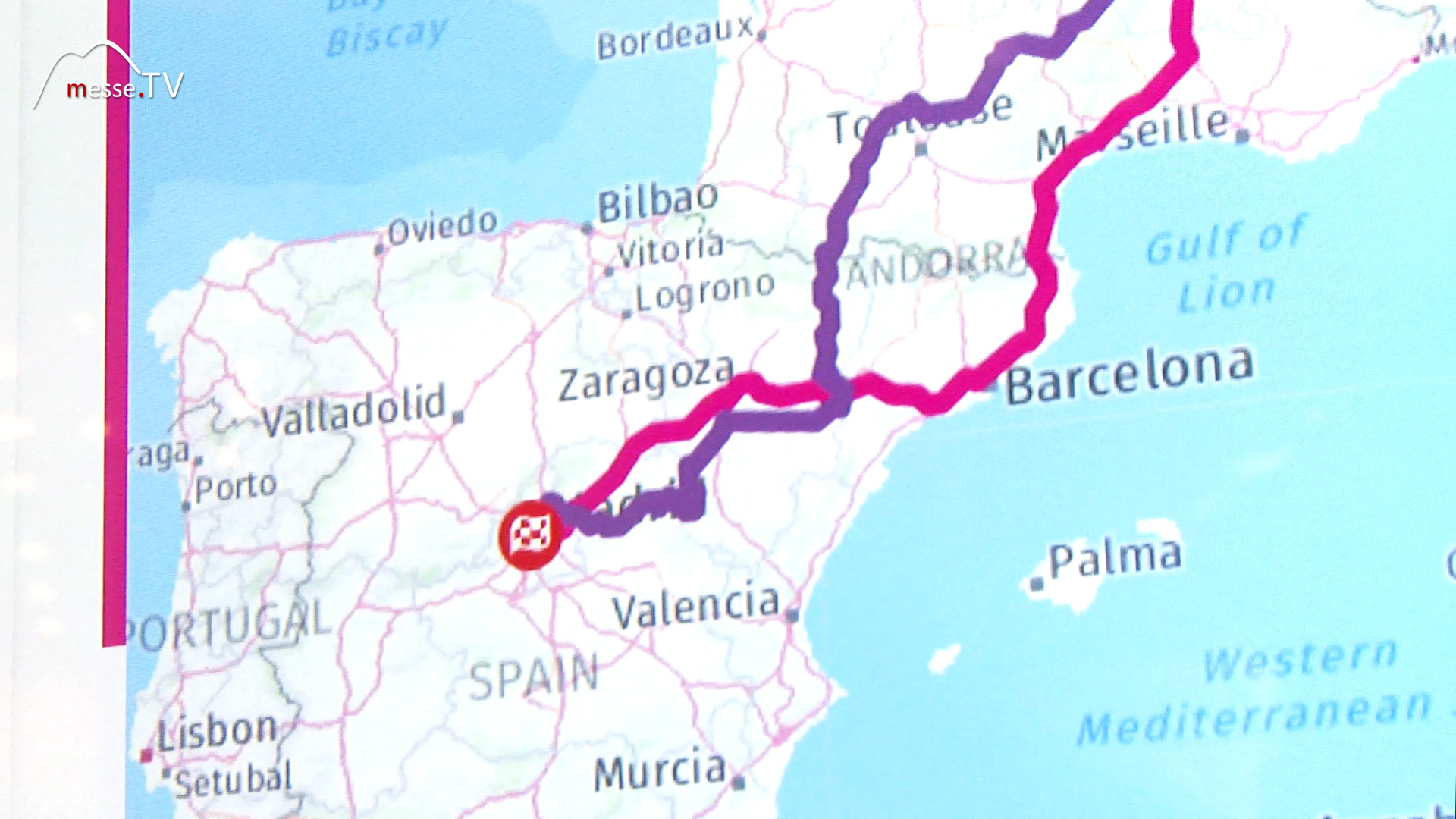
Sustainability, research, and long-term perspective
Sustainability is a central component of the company's strategy. Michelin is pursuing the goal of continuously increasing the proportion of renewable and recycled materials in tire production. In the long term, the company aims to manufacture tires entirely from sustainable raw materials. At the same time, production processes are being made more energy-efficient and emissions are being systematically reduced. Research and development play a key role in this. Michelin is investing in new material technologies, recycling processes, and alternative raw materials to reduce dependence on fossil resources. These efforts affect not only tire production, but also related areas such as industrial materials and high-performance applications.
The Michelin Guide as an independent pillar
In addition to its industrial activities, Michelin is also known as the publisher of the Michelin Guide. Over decades, the guide has developed into an internationally recognized orientation system for gastronomy and the hotel industry. The ratings are independent of tire production and follow their own journalistic criteria. The Guide is thus exemplary of the company's commitment to quality, systematic approach, and reliability outside the industry as well. Overall, Michelin today presents itself as a diversified technology company that does not view mobility in isolation, but rather as an interplay of technology, data, responsibility, and long-term planning.
Trade fair reporting Germany - Trade fair knowledge, dates & events


