The smarter E Europe 2025: bidirectional charging in the focus of the energy transition
by B. Velonavy - 2025-04-21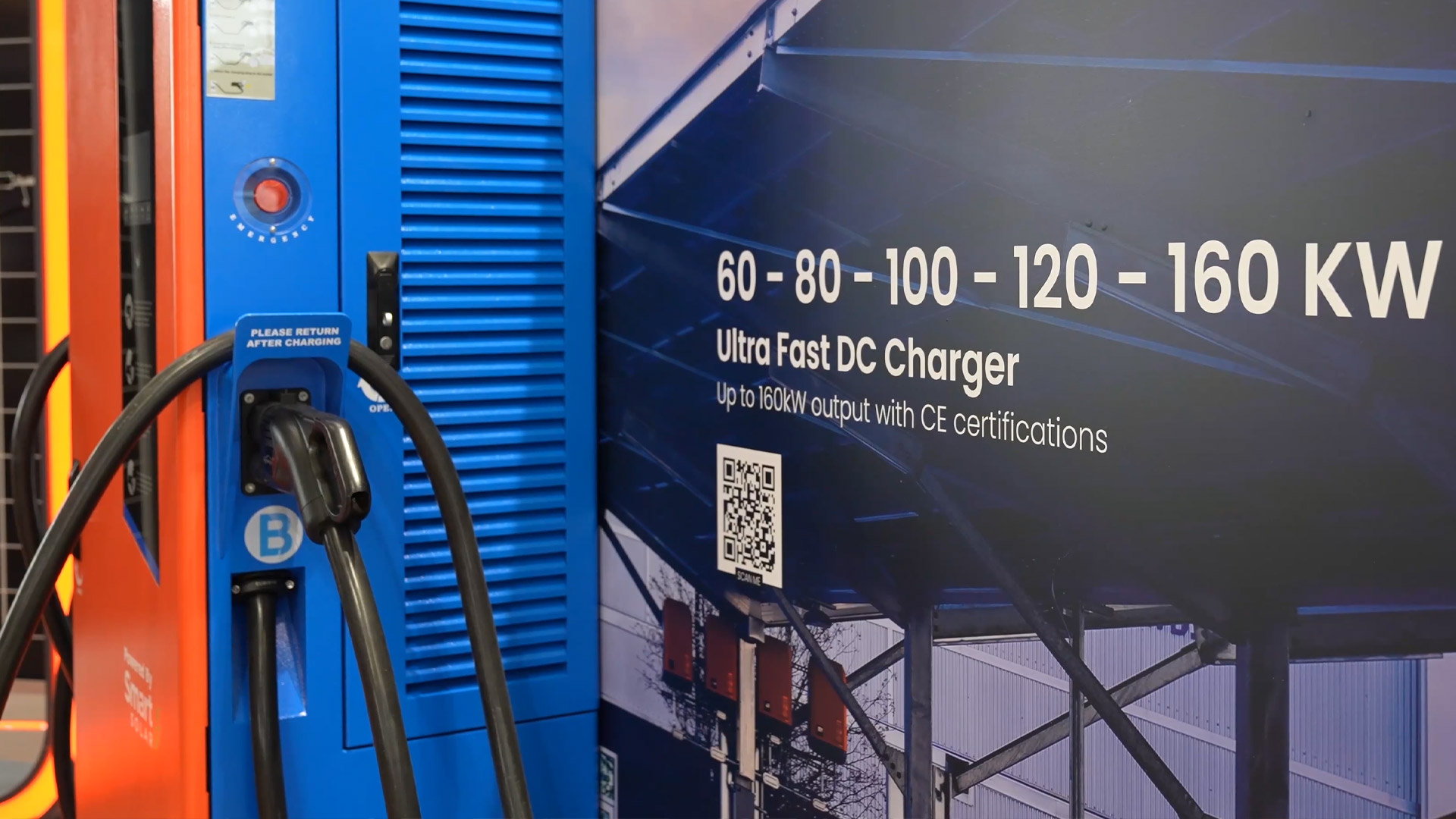
The energy transition is placing new demands on flexibility, controllability and grid stability. As the share of renewable energies grows, so does the need for storage systems that can react quickly and balance out peak loads. Bidirectional charging of electric vehicles plays a key role in this. The smarter E Europe 2025 is dedicating a special show to this topic for the first time, putting the spotlight on a technology that could fundamentally change the energy system. From 7 to 9 May 2025, the trade fair alliance in Munich will bring together around 3,000 exhibitors and more than 110,000 trade visitors, creating a framework for discussion, demonstration and concrete application examples.
Electric cars as the electricity storage solution of the future
The approach behind bidirectional charging is clear: electric cars have powerful batteries that are only used to a small extent in everyday life. Most of the time, vehicles are parked in car parks or garages, connected to charging infrastructure or at least technically connectable. Vehicle-to-grid, vehicle-to-building or vehicle-to-home open up the possibility of systematically integrating these storage capacities into the energy system. For the energy transition, this means a paradigm shift. Electricity is no longer stored only in large central storage facilities, but is distributed decentrally in millions of vehicle batteries. Pilot projects in several European countries are already showing that peak loads can be smoothed, renewable energy better integrated and grid expansion costs reduced. Experts such as Dr Frank Spennemann from Mercedes-Benz and Marcus Fendt from The Mobility House point out that bidirectional charging should not be seen as a vision of the future, but as a technology-neutral solution that will be ready for the market in the coming years.
Special exhibition as a link between theory and practice
The special exhibition at The smarter E Europe 2025 in Hall C6 picks up exactly where this leaves off. Instead of purely conceptual presentations, the focus is on functional systems. Visitors will gain insights into charging hardware, energy management systems, communication standards and regulatory frameworks. Live demonstrations will show how vehicles can absorb, store and, if necessary, release electricity – integrated into real grid and building structures. An important aspect here is economic efficiency. The special show highlights business models for private households, fleet operators and energy suppliers. New revenue potential is emerging, particularly in conjunction with dynamic electricity tariffs, self-consumption optimisation and grid-friendly control. At the same time, it is clear that technical standards and legal clarity are crucial for bringing bidirectional charging to the masses.
Grid stability, regulation and market integration
In addition to technology, system integration plays a central role. The energy transition requires finely tuned interaction between generation, consumption and storage. Bidirectional charging can serve as a flexible tool here, but it requires a suitable regulatory framework. The trade fair will therefore also discuss how grid operators, politicians and industry can develop solutions together. A recurring theme is the question of grid fees, billing for feed-in and responsibility for grid stability. The smarter E Europe 2025 provides a space for this dialogue and brings together players from the energy industry, the automotive industry and regulation. The aim is to remove barriers and establish practical standards that ensure both investment security and system stability.
In-depth information through forums and guided tours
The special show will be complemented by thematic sessions in the Power2Drive Forum and guided tours of the Messe München exhibition grounds. These formats are aimed at trade visitors who want to delve deeper into technical details, business models and implementation strategies. Cooperation partners such as Eurelectric, FfE and The Mobility House provide a broad perspective on the content and contribute their experience from ongoing projects. The guided tours connect various stations at the trade fair to create an overall experience and show how bidirectional charging interacts with photovoltaics, stationary storage and intelligent load management. The programme is supported by sponsors such as Sigenergy and Bi-CCS, who present their solutions in the context of an integrated energy system.
Bidirectional charging as a building block of the energy transition
With the prominent placement of this topic, The smarter E Europe 2025 is sending a clear signal. Bidirectional charging is not seen as an isolated technology, but as an integral part of the energy transition. The trade fair shows that electromobility and energy supply are increasingly converging and enabling new forms of flexibility. This opens up an additional option for local authorities, businesses and private households to actively participate in the energy transition. At the same time, it is clear that the path to widespread implementation still requires coordination, investment and political clarity. The smarter E Europe 2025 offers the ideal platform for this – as a place for exchange, classification and concrete implementation.
Trade fair reporting Germany - Trade fair knowledge, dates & events


